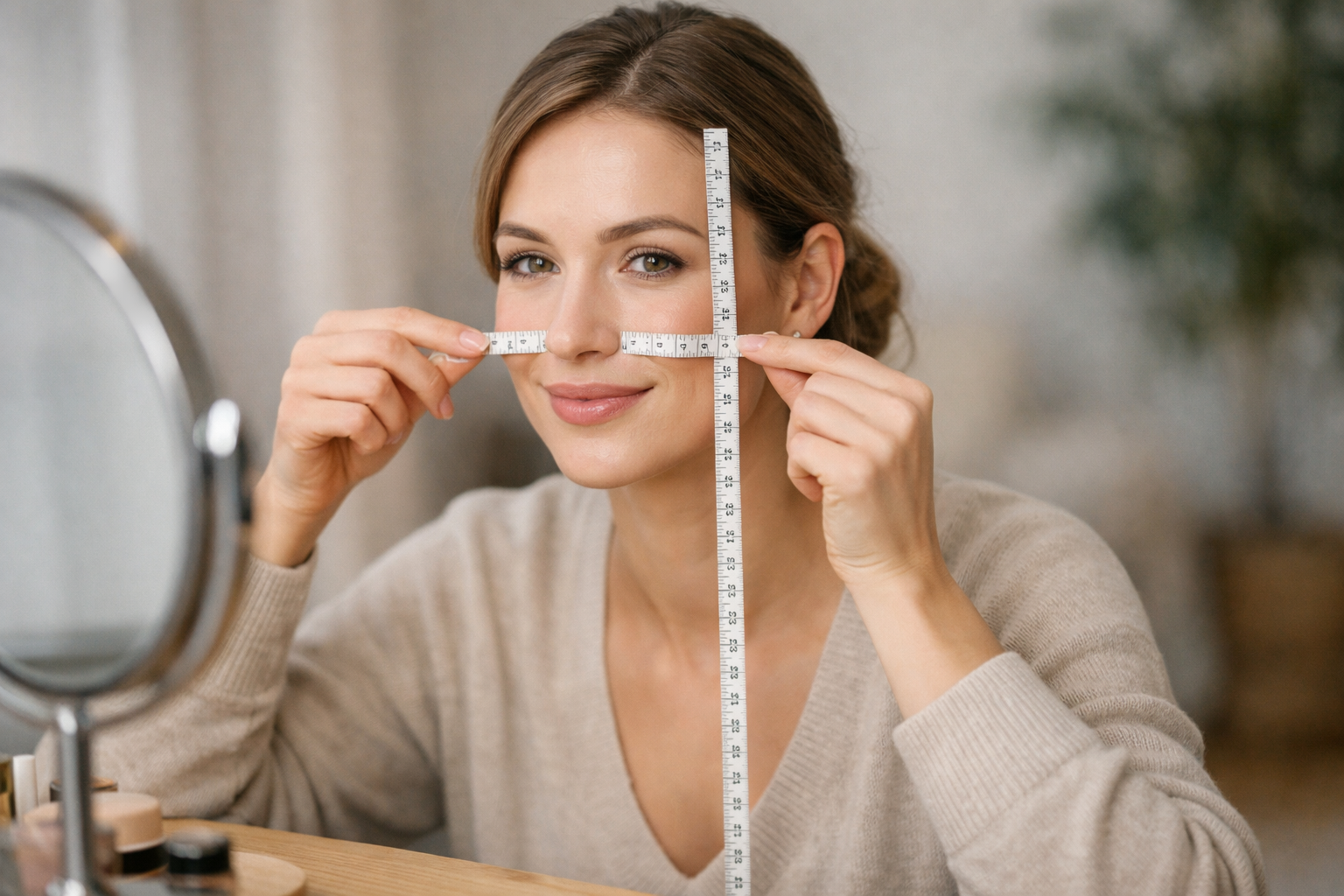
How to Measure Your Face Shape (And Why AI Does It Better)
The tape measure method works, but self-measurement is inconsistent. Here's how to do it right — plus a faster, more accurate AI alternative.
FaceShapeDetector Editorial Team
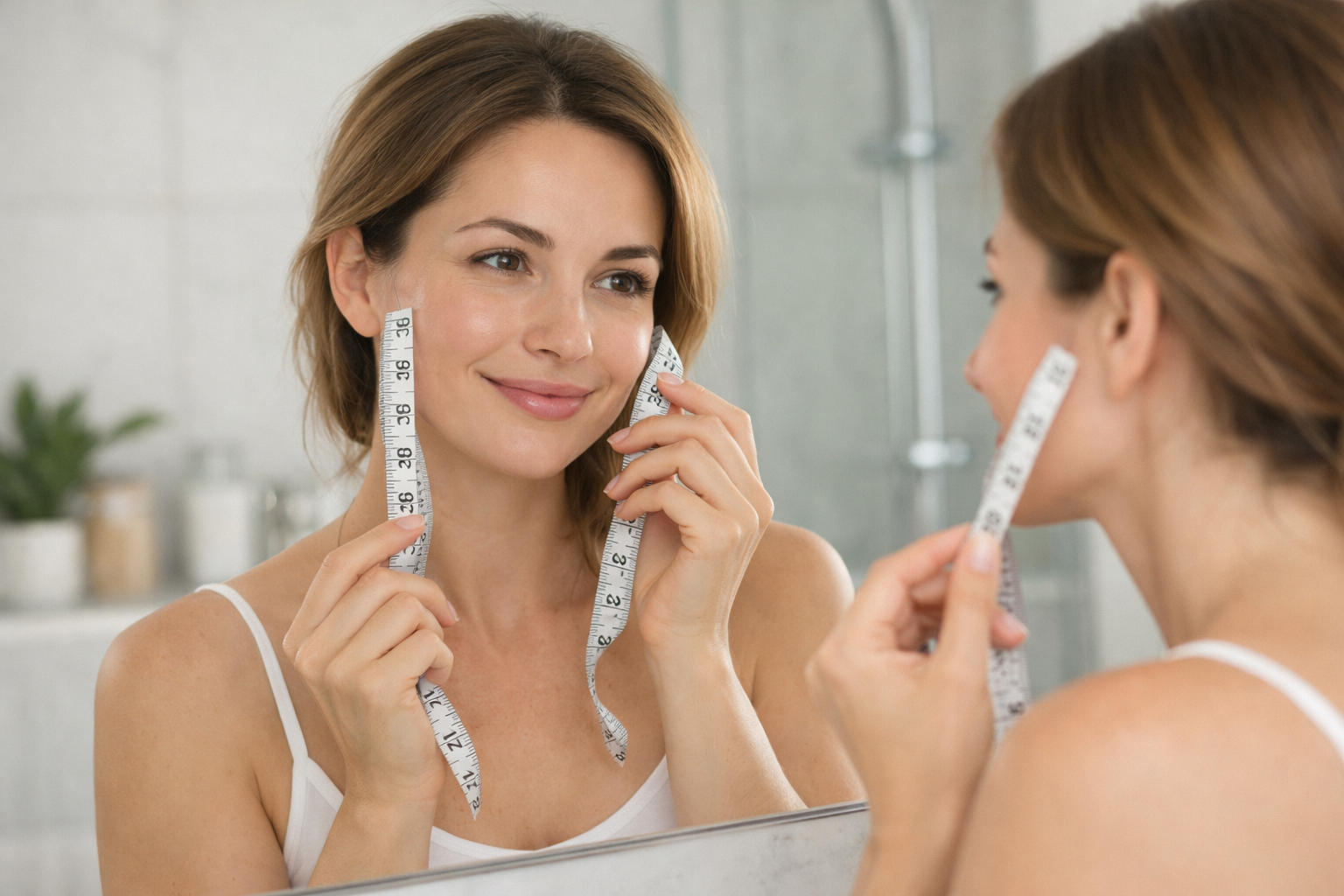
How to Measure Your Face Shape: 4 Measurements You Need
Your face shape is determined by four measurements. Take all four, then compare the ratios. You need: a soft flexible tape measure (not a ruler), good lighting, and a mirror or a second person to help.
Pull all hair away from your face before measuring.
The 4 Measurements — Step by Step
- Forehead width:: Measure across the widest part of your forehead — usually about halfway between your hairline and your eyebrows. Measure from temple to temple at that point.
- Cheekbone width:: Find the widest point across your cheekbones. Measure from the outer edge below one eye to the outer edge below the other. This is usually the widest measurement on most faces.
- Jaw width:: Measure from the corner of your jaw (the angle where jaw meets ear) on one side to the same point on the other side. Don't measure along the jaw line — measure straight across.
- Face length:: Measure from the center of your hairline straight down to the tip of your chin. If you have a receding hairline, estimate where your hairline would naturally be.
How to Read Your Measurements
| If your measurements show... | Your shape is likely... |
|---|---|
Face length > all widths, forehead slightly wider than jaw | Oval |
Face length ≈ face width, all widths similar, jaw is soft | Round |
Face length ≈ face width, jaw width ≈ forehead width, jaw is angular | Square |
Forehead width > cheekbone width > jaw width, narrow chin | Heart |
Cheekbone width > forehead width AND jaw width | Diamond |
Face length >> face width, jaw width ≈ forehead width, straight jaw | Oblong |
The Problem with Self-Measurement
Self-measurement introduces error at every step: mirror positioning, tape placement, head tilt, and reading the tape at an angle all affect results. Studies show people consistently misidentify their own face shape — the most common error is calling an oval face "round" or a heart face "oval."
This is why most people get different results each time they try the tape measure method.
What to Do with Your Measurements
Once you have the four numbers, the ratios tell you your shape. But remember: most people don't fall cleanly into one category. If your measurements place you between oval and heart, you're probably a 70/30 blend — and that blend percentage matters for styling.
A face that's 80% oval + 20% heart needs very different styling advice than a face that's 55% oval + 45% heart. The latter needs much more active correction at the chin and forehead.
Why AI Is More Accurate Than the Tape Method
Tape Measure
4 manual measurements, estimated in a mirror. Errors compound. Single forced label output. Takes 10+ minutes with consistent results rare.
AI Detection
468 precise facial landmark points. Consistent and repeatable. Returns a blend percentage like 78% oval + 22% heart. Takes 10 seconds.
The Faster Method
The tape measure method is fine as a learning exercise — it helps you understand which measurements matter. But for a result you can actually style from, AI landmark detection is faster and more accurate.
Upload a front-facing photo to FaceShapeDetector. Get your Face Shape Blend™ in 10 seconds — no tape required.
Style Reference